SBOM Viewer - What is SBOM, the MVP Design Pattern for GUIs, Making a Cross-Platform Desktop GUI with Python's Tkinter
https://github.com/k-candidate/sbom-viewer
What’s the project? and why do it?
There’s no desktop GUI that displays SBOMs.
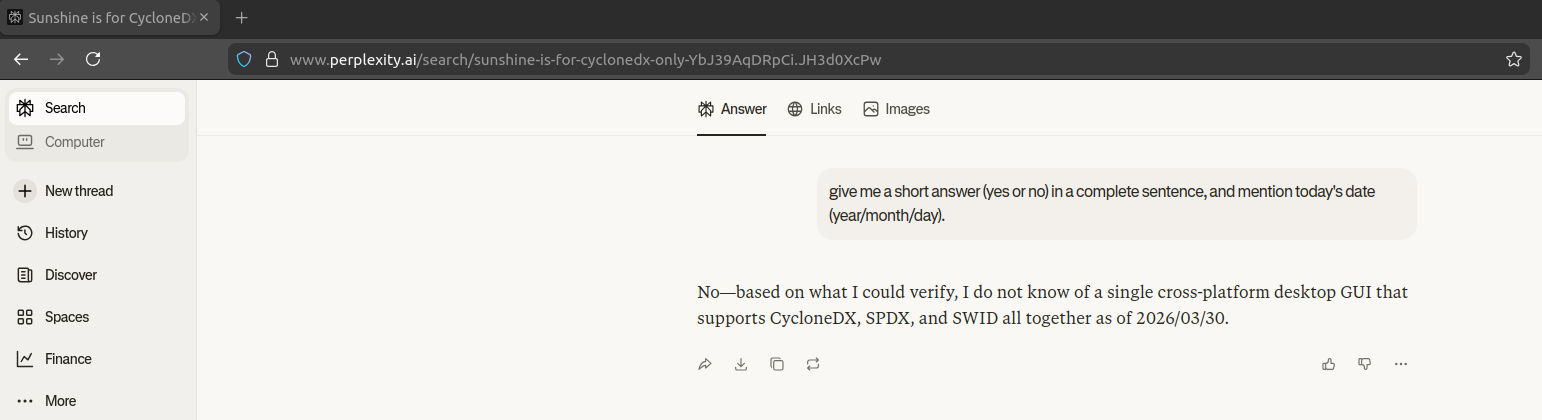
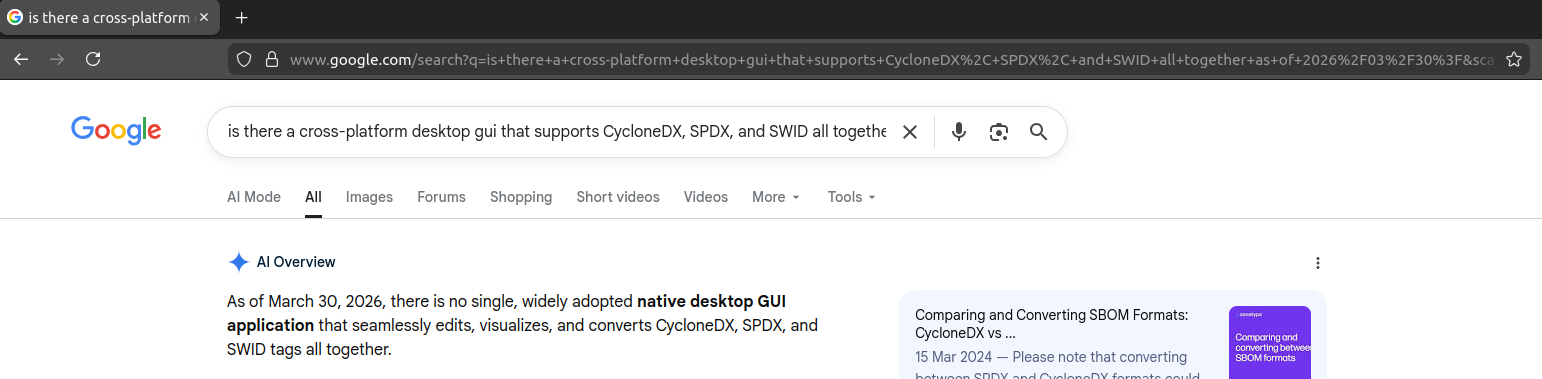
Sure there are TUIs and web apps, but no desktop GUI.
It’s a gap in the market and I am happy to fill it: https://github.com/k-candidate/sbom-viewer
What is SBOM?
This looks good: https://github.com/resources/articles/what-is-an-sbom-software-bill-of-materials
I do not want to re-write what’s already out there.
What is MVP?
MVP (Model-View-Presenter) is a design pattern for GUIs.
This looks good: https://medium.com/@li.ying.explore/looking-into-gui-architecture-design-patterns-f87d72751099.
Basically:
- Model = app data
- View = the graphical part (in my case the Tk widgets)
- Presenter = app behavior
The app sbom-viewer is structured around MVP:
- The Model lives in
app/models.py. Its job is to hold normalized SBOM data and answer questions about it: metadata, components, dependencies, filtering, and component lookup. It does not know anything about Tkinter widgets or button clicks. - The View lives in
app/view.py. This is the Tkinter window. It creates the widgets, tables, tabs, search boxes, and status label, and exposes simple methods likeset_metadata(...),set_component_rows(...),set_dependency_rows(...), andshow_error(...). In MVP terms, the view is intentionally “dumb”: it renders data and forwards user actions, but it does not decide “business” behavior. - The Presenter lives in
app/presenter.py. This is the coordinator. It reacts to user actions such as opening a file, reloading, filtering, or selecting a component. It calls the parser layer, loads data into the model, asks the formatter for GUI-friendly rows, and then updates the view. This is the layer that connects “what the user did” to “what the app should show.”
The flow is:
main.pycreatesSBOMPresentermain.pycreatesMainView- the presenter attaches to the view
- user actions in the view call presenter methods
- the presenter loads or filters data via the model
- the presenter sends display-ready results back to the view
And then there are some supporting pieces:
- parsers in
app/parsers/convert CycloneDX, SPDX, and SWID files into one normalized internal shape - formatting in
app/presentation.pyturns model data into rows and detail text for the GUI
Why do it this way?
I think it makes these things easier:
- testing, because most behavior lives outside the GUI
- refactoring, because parsing, state, and rendering are separated
- understanding it, because each layer has a clear responsibility
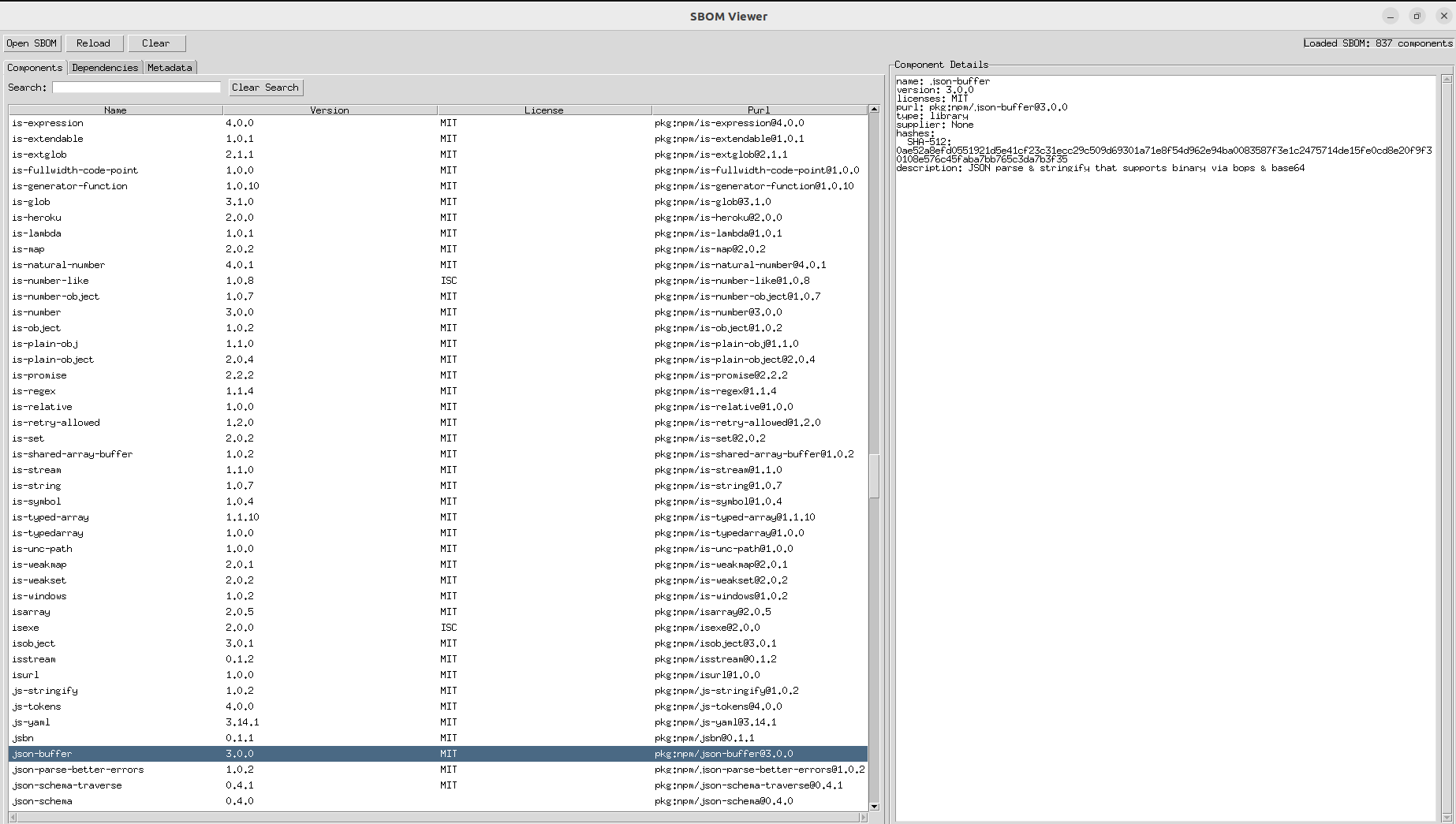
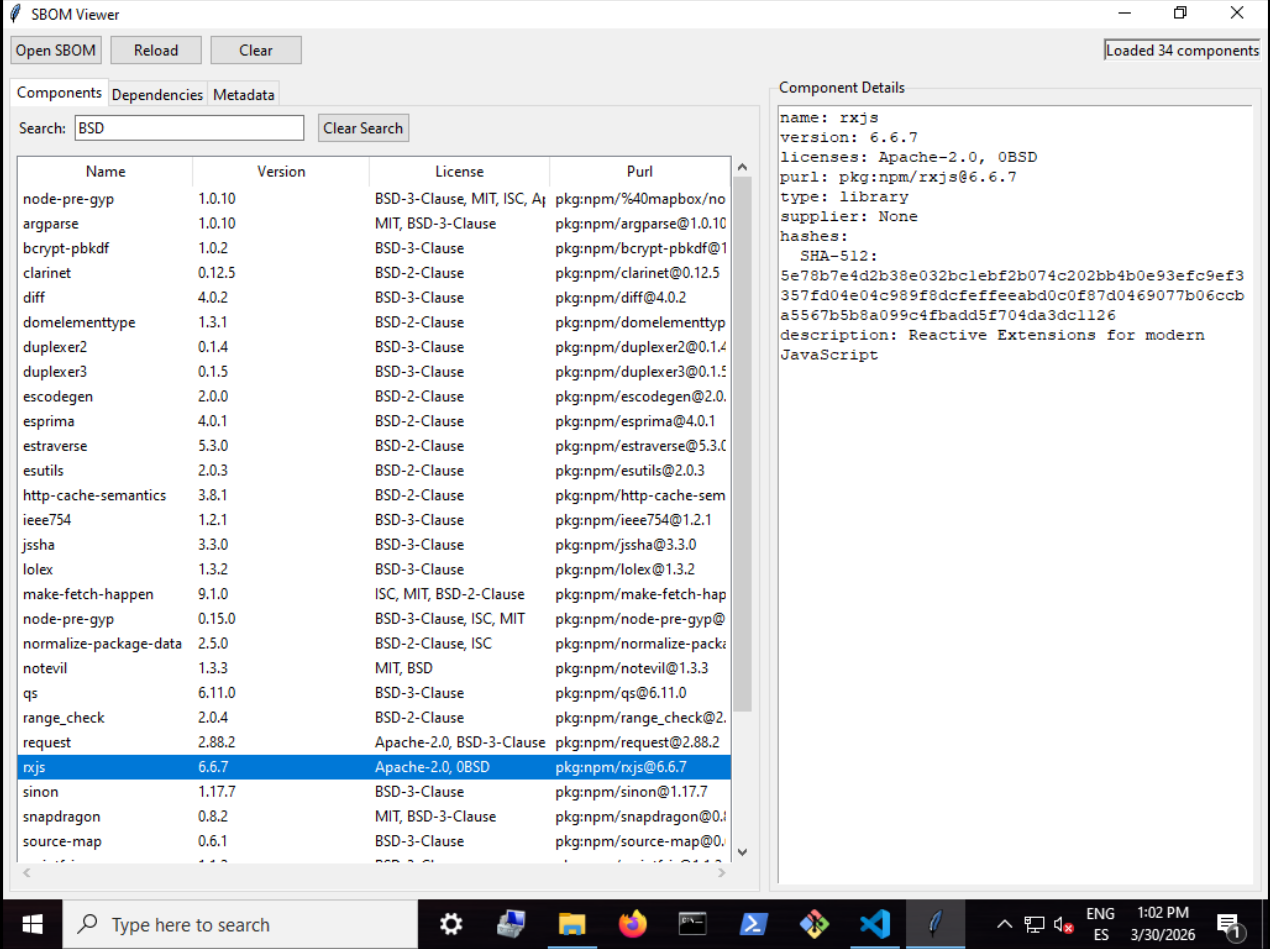
What the first release looks like
On Ubuntu:
On Windows:
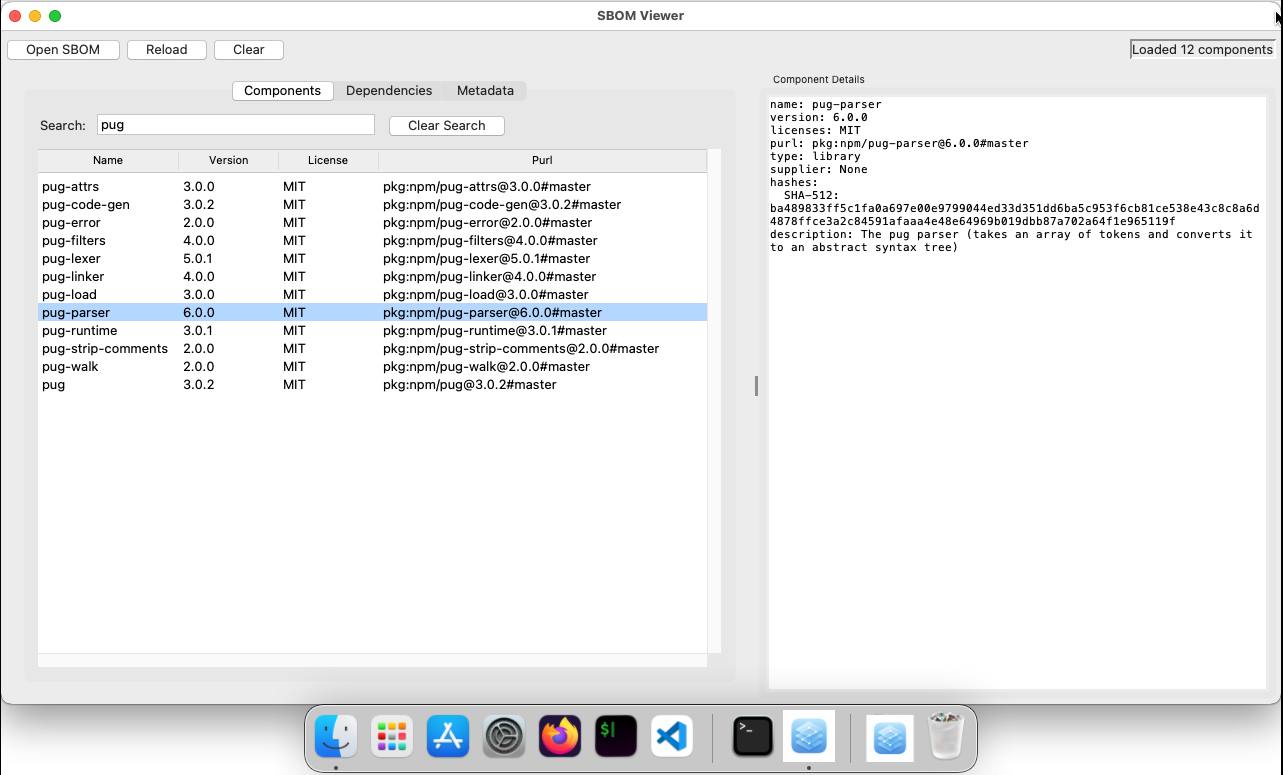
On macOS:
Privacy-First Subscription
Receive a notification in your inbox whenever I publish a new post. This is a reader-focused subscription loop built for absolute privacy: you stay in control, and I do not see, track, or collect your email address.
Follow via FeedRabbit